
Process
How long before you can drive on new concrete
The real curing timeline for new concrete driveways in Perth, from foot traffic to vehicles, and how weather changes it.
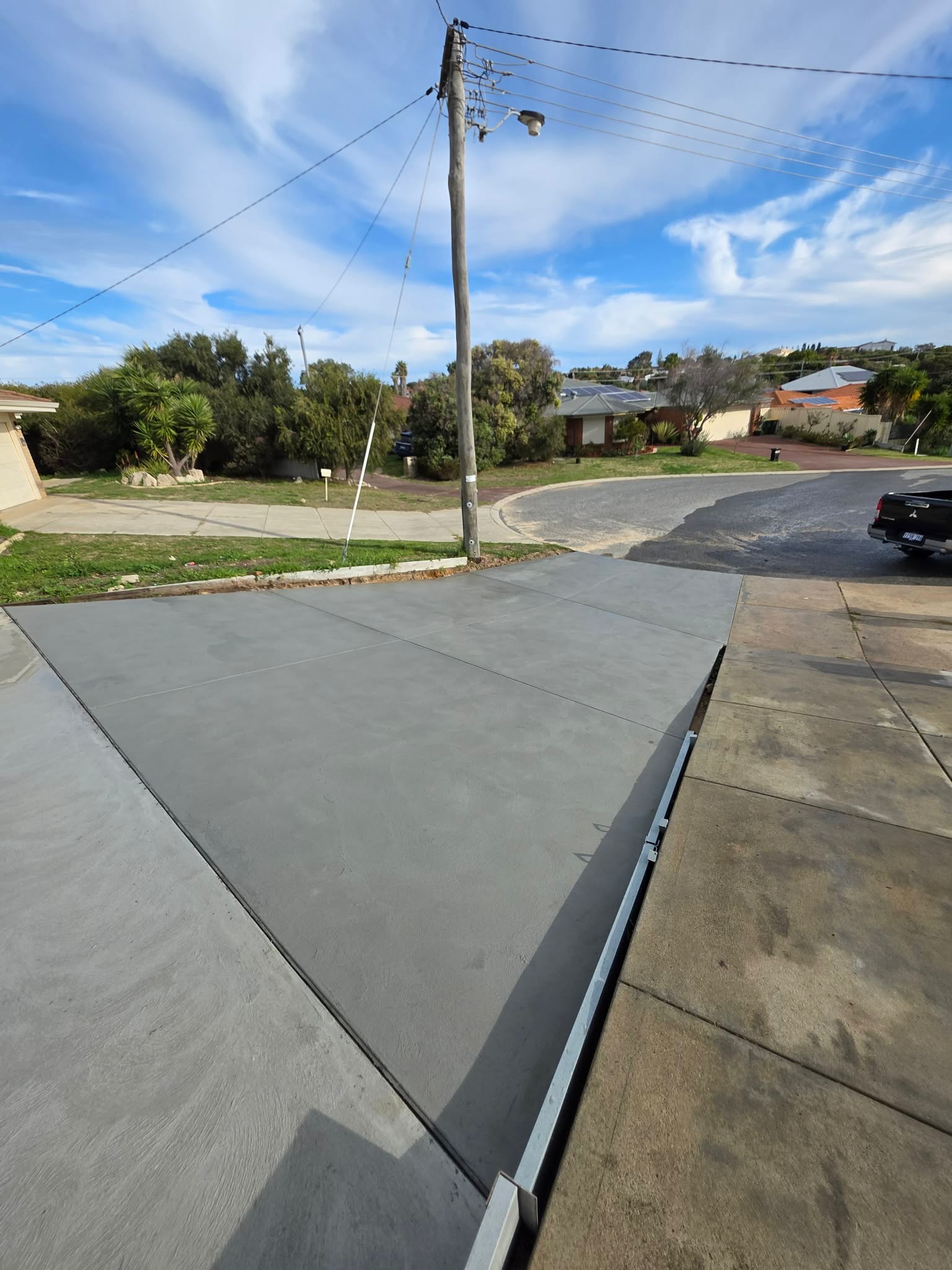
You have just had a new driveway poured and the obvious question is when you can actually use it. Walk on it too soon and you risk marking the surface. Drive on it too soon and you risk real damage that is expensive to fix. Here is a straightforward timeline for how long new concrete needs before foot traffic, vehicles and full use, plus how Perth weather changes things.
The short version
- Foot traffic: generally safe after 24 to 48 hours
- Vehicles: generally safe after around 7 days
- Full strength cure: around 28 days
These are general guides, not guarantees for every pour. Always confirm timing with your concreter for your specific slab, mix and weather conditions, because thickness, mix design and temperature all shift these numbers.
Why concrete takes so long to cure
Concrete does not just dry, it cures through a chemical reaction between cement and water called hydration. That reaction keeps happening for weeks, gradually building strength. The surface can look and feel solid within a day or two, but the concrete underneath is still developing strength well beyond that point.
This is why the guidance splits into stages. The slab reaches enough strength to handle light foot traffic quickly, but it needs much longer to handle the weight and torque of a vehicle, especially turning wheels which put lateral stress on the surface.
Day by day
24 to 48 hours: This is roughly when a new slab can handle careful foot traffic, provided it has not rained and the surface has had a chance to firm up. Avoid dragging furniture, dropping heavy objects or letting pets dig at the surface during this window.
Around 3 to 5 days: The slab is building real strength but is still not ready for vehicle weight. Light wheeled items like a wheelbarrow can sometimes be fine at this stage, but avoid parking a car or driving over it.
Around 7 days: This is the general point where a standard residential driveway can handle everyday vehicle traffic. The slab has enough strength at this point to cope with the weight of a typical car or light SUV without damage.
Around 28 days: This is when concrete reaches its designed strength under standard curing conditions. It does not mean the driveway is unsafe to use before this, it means the concrete is still gaining strength up until this point, and heavier or unusual loads should wait until closer to this mark.
What changes the timeline
Weather. Perth’s climate cuts both ways. Hot, dry, windy days can cause the surface to dry too fast, which risks surface cracking if it is not properly cured with wet hessian, curing compound or covering. Cooler, wetter conditions slow the strength gain down, meaning the driveway may need slightly longer before vehicles than the guide above. Ask your concreter what curing method was used on your pour, since that affects how strictly you should stick to the timeline.
Concrete mix. Different mix designs gain strength at different rates. A standard residential mix follows the timeline above reasonably closely, but if a faster-setting mix was specified for a job with time pressure, your concreter will give you a specific timeline for that pour.
Slab thickness and reinforcement. A driveway built to handle heavier loads, like a caravan or boat, is often thicker and may be given extra curing time before it sees that heavier vehicle, even if a standard car could use it sooner.
Sun exposure. A driveway in full western sun through a Perth summer afternoon behaves differently to one that is shaded most of the day. Direct sun accelerates surface drying, which is part of why proper curing care matters more here than in milder climates.
Curing methods and why they matter
How a slab is cured has a direct effect on how reliable the timeline above is for your specific driveway. Common curing approaches include:
Curing compound, a sprayed-on membrane that slows moisture loss from the surface as the concrete gains strength. This is common on residential driveways because it is straightforward to apply and effective in Perth’s dry, windy conditions.
Wet curing, covering the slab with hessian or plastic sheeting and keeping it damp for the first several days. This is more labour-intensive but can give a more controlled cure in extreme heat.
Plastic sheeting alone, which traps moisture in the slab without the need for regular wetting, useful in situations where daily site access to wet the slab is not practical.
Ask which method was used on your pour. If a fast-drying, high-wind day meant extra curing care was needed, your concreter will be able to tell you whether the standard timeline still applies or whether it is worth waiting a little longer before vehicles.
Signs something might be wrong
Most driveways cure without any issues, but it is worth knowing what to watch for. Fine surface cracks, called crazing, can appear if the top of the slab dried too quickly and are usually cosmetic rather than structural. Larger, deeper cracks, or a section that feels noticeably different underfoot to the rest of the slab, are worth raising with your concreter rather than waiting to see if they get worse. Catching an issue early, while it is still within a workmanship warranty period, is always easier than dealing with it after the fact.
What not to do during curing
- Do not let sprinklers hit a freshly poured slab in the first day or two
- Do not park heavy machinery, skip bins or trailers on it before the vehicle-ready mark
- Do not use harsh chemicals or acid cleaners on it until it has fully cured
- Do not assume the surface looking dry means it is fully cured underneath
Sealing and its effect on timing
If your new driveway is being sealed, whether that is an exposed aggregate finish or plain concrete, sealing generally happens after the concrete has had adequate time to cure, not immediately after the pour. Sealing too early can trap residual moisture in the slab, which affects both the look of the finish and how well the sealer performs over time. Your concreter will advise on the right window for sealing based on the specific product used and how the slab has cured, which is generally a separate conversation to when the driveway is safe to drive on.
A simple week-by-week guide
To put the whole timeline together in one place:
- Day 1 to 2: careful foot traffic only, no water pooling, no heavy objects
- Day 3 to 5: still building strength, avoid vehicles and heavy wheeled loads
- Day 7: general vehicle traffic is typically fine for a standard residential driveway
- Week 2 to 4: concrete continues gaining strength, avoid unusually heavy or concentrated loads beyond normal vehicle use
- Day 28: standard design strength reached under typical curing conditions
Keep in mind this is a general guide. Your specific pour, mix and weather on the day can shift these numbers, so always confirm with whoever poured your driveway rather than relying purely on a generic timeline.
Urgent timelines
If you are working to a deadline, whether that is a house sale, an event or simply needing the driveway usable fast, talk to us about it upfront. CJH Concrete does urgent and weekend pours across Perth’s northern suburbs and can plan the mix and curing approach around a tight timeline where possible.
For a free measure and quote, or to talk through timing for your project, call 0476 722 330 or get in touch via contact. You can also see recent work on our gallery page or read more about our driveways and slabs and pads services.