
Local knowledge
Driveway crossover approval in Perth: what to know
How crossover approval works with Perth metro councils, the difference between verge and inside-boundary work, and who applies.
If your new or replacement driveway crosses the verge to meet the road, there is a good chance you need council approval before work starts, not just for the section on your own property but for the crossover itself. This trips a lot of people up because it is not always obvious where “your” driveway ends and council-controlled land begins. Here is a general guide to how crossover approval works across Perth metro, using City of Wanneroo and City of Joondalup as examples, since these cover much of the northern corridor.
Verge work vs inside-boundary work
The key distinction is where the concrete actually sits.
Inside your property boundary, a driveway is generally treated like any other concrete work on your land. Standard building requirements still apply, but you are not dealing with council-owned road reserve.
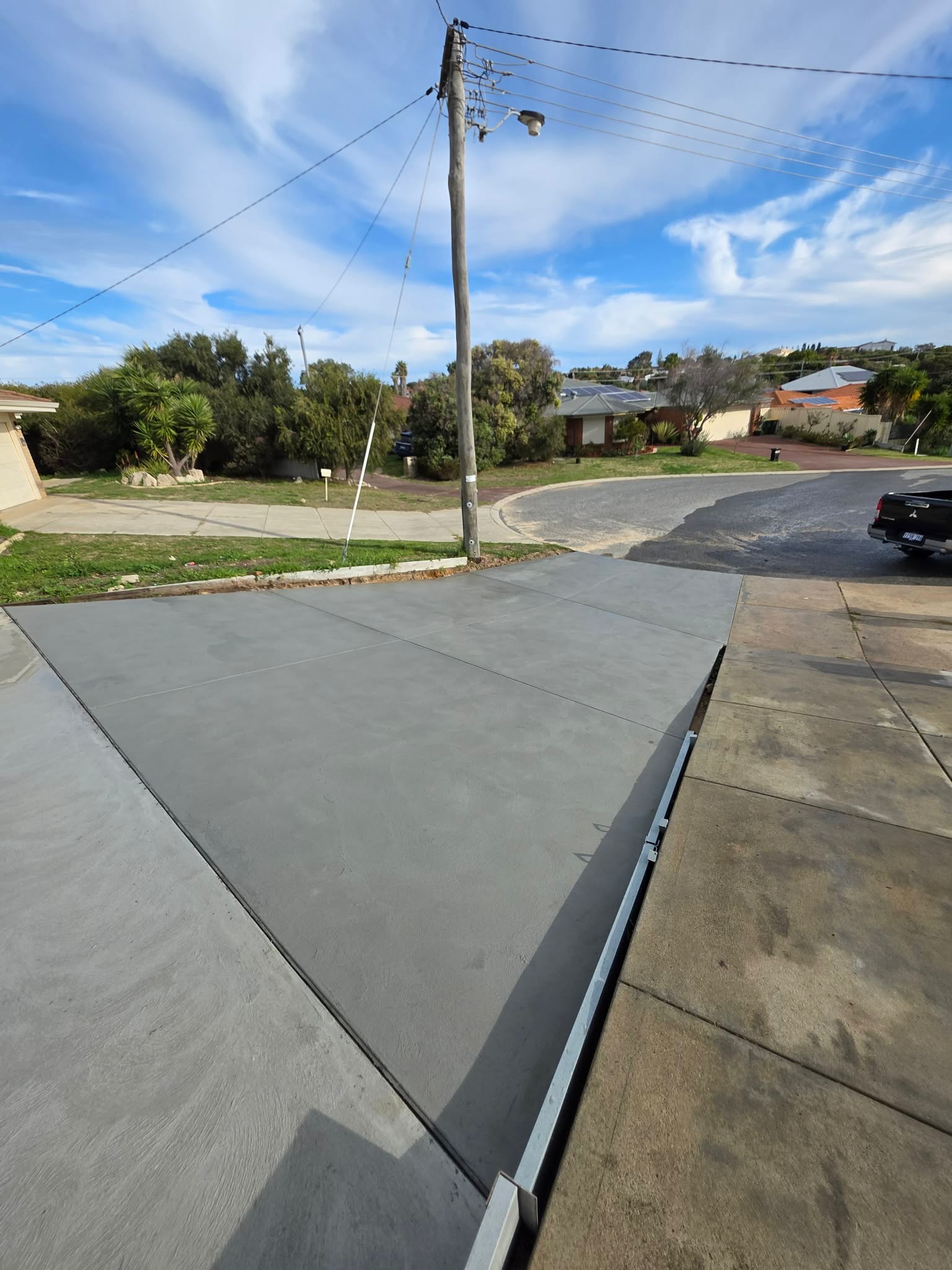
The verge (also called the road reserve) is the strip of land between your property boundary and the road, and in Perth metro this is council-owned land even though it often looks like part of your front yard. A crossover is the section of driveway that crosses this verge to connect your property to the road. Because it sits on council land and connects to the road network, councils generally require an approved application and often inspection before and after the work, regardless of which local government area you are in.
This means a typical Perth driveway project usually involves two things happening together: the driveway itself on your property, and a crossover permit for the section crossing the verge.
Why councils control this
Crossovers affect things councils are responsible for managing across the whole street, including:
- Where vehicles can safely enter and exit onto the road, particularly relative to sightlines, other driveways and intersections
- Drainage, since a crossover can change how stormwater moves along the verge and into the road
- Location and protection of services that may run under the verge, like water, gas or telecommunications infrastructure
- Consistent width and construction standards along a street
This is also why you generally cannot just widen a crossover, add a second crossover, or reposition one without going through an approval process, even if the work is otherwise straightforward.
Typical process
While the exact forms and portals differ between councils, the general process across Perth metro LGAs, including City of Wanneroo and City of Joondalup, tends to follow a similar shape:
-
Check requirements before design. Most councils publish crossover specifications covering acceptable materials, width limits, splay requirements near intersections and any setback rules. Checking this before finalising your driveway design avoids redesigning after a rejected application.
-
Submit an application. This is usually done through the council’s online services portal or a dedicated crossover application form, along with a site plan showing the proposed crossover location, width and materials.
-
Approval and any conditions. Councils may attach conditions, such as protecting nearby street trees, verge landscaping requirements, or maintaining a minimum distance from a stobie pole, street sign or drainage pit.
-
Inspection. Many councils inspect the crossover at some stage of construction, sometimes before pouring to check formwork and base, and sometimes after completion to confirm it matches the approved plan.
-
Sign-off. Once approved, the crossover is confirmed as compliant, which matters if you ever sell the property or if there is a dispute about who is responsible for verge damage down the track.
Who actually applies
This varies. In many cases the homeowner applies directly, particularly for a straightforward like-for-like crossover replacement. For new crossovers, repositioned crossovers, or anything near an intersection or with drainage complications, some councils prefer or require the contractor doing the work to lodge the application, since they can speak directly to construction detail if council has questions.
Either way, it is worth confirming directly with your specific council, since requirements and preferred applicants differ between local government areas and can change. Contacting the council’s engineering or infrastructure services team before work starts is the safest way to get a current, accurate answer for your address.
Materials and finish restrictions
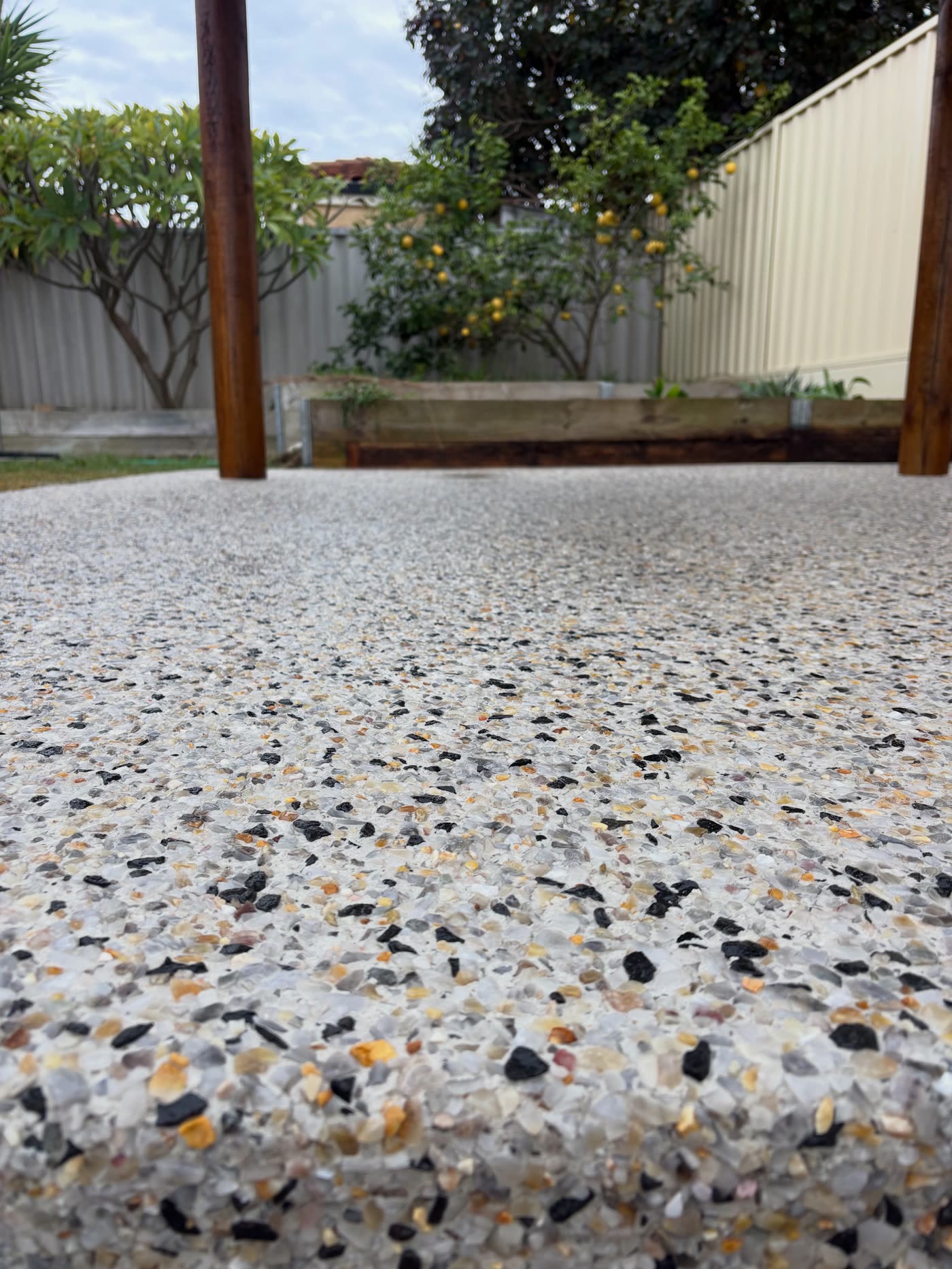
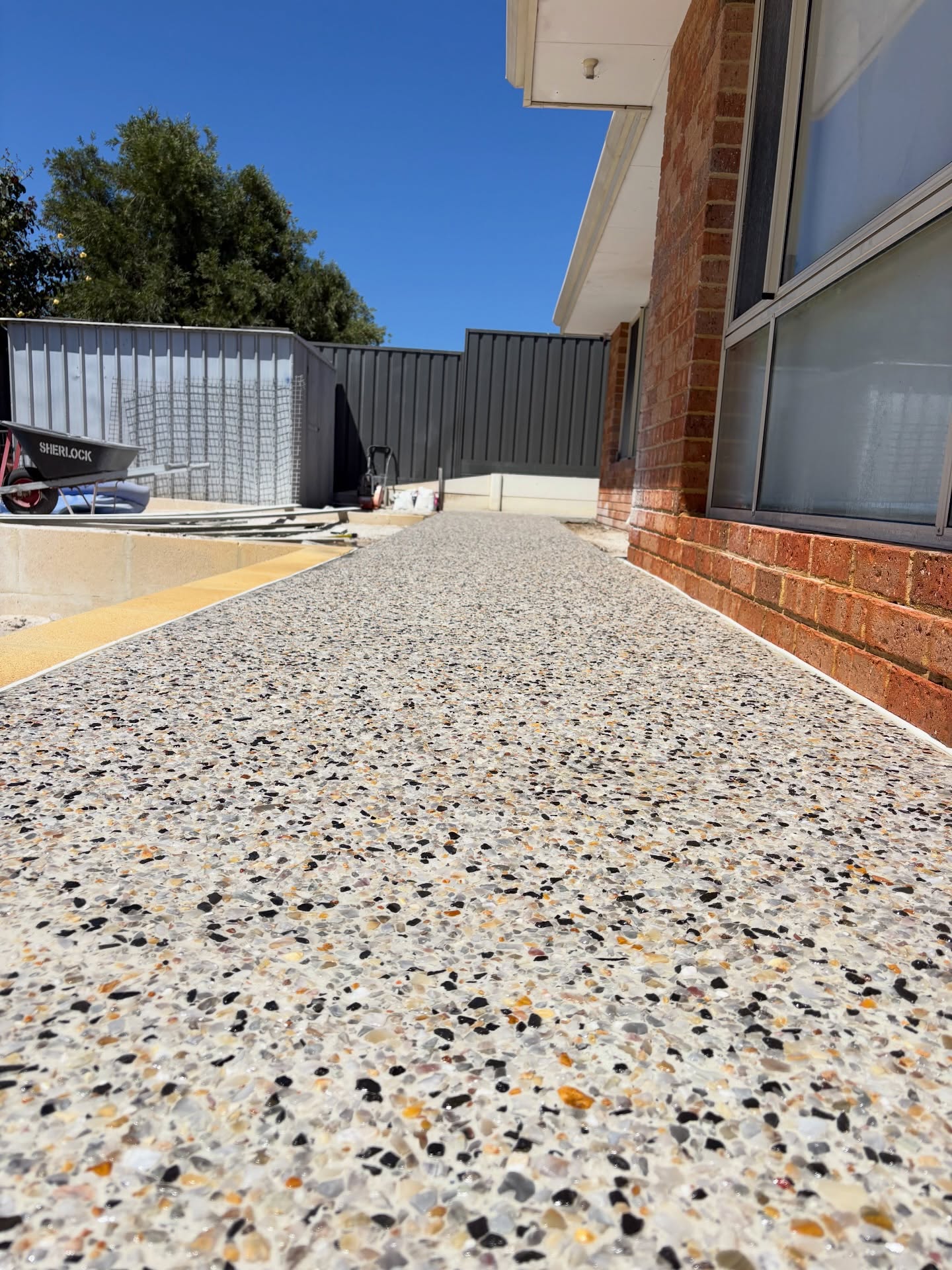
Some councils restrict which finishes are acceptable within the crossover section specifically, even if the rest of your driveway uses a different finish. This is worth checking early, since it affects design decisions like whether your exposed aggregate blend can run continuously from the street through to the garage, or whether the crossover section needs to be a different, council-approved finish such as plain concrete with a specific surface texture.
Where this applies, a common approach is to build the crossover to the council’s specified finish and standard, then transition to your preferred exposed aggregate blend once the driveway crosses onto your own property. This keeps the council-controlled section compliant without compromising the overall look of the driveway on your land.
What this means for your project timeline
Crossover approval takes time, and it is worth building into your project schedule from the start rather than discovering the requirement once concrete trucks are booked. Depending on the council and time of year, approval can take anywhere from a couple of weeks to longer if the application needs revision or falls near a public holiday period.
Common issues that delay approval
A few recurring issues tend to slow crossover applications down across Perth metro councils, and knowing about them ahead of time can help you avoid the same delays.
Proximity to street trees. Councils are generally protective of established street trees, and a crossover positioned too close to one, or that would require root disturbance, is likely to need redesign or additional conditions before approval.
Sightline and intersection distance. Crossovers positioned too close to a corner or another driveway can raise safety concerns around vehicles entering and exiting the road safely, which may require repositioning the crossover further along the frontage.
Services running under the verge. Water meters, gas connections, telecommunications pits and stormwater infrastructure often run under or near the verge. A crossover that conflicts with these may need redesign, or the relevant utility may need to be involved before work proceeds.
Incomplete applications. Missing a site plan, unclear dimensions, or not specifying materials and finish clearly are common reasons an application gets sent back for more information rather than approved on the first submission.
Replacing an existing crossover
If you already have a crossover and are simply replacing worn or cracked concrete with a new exposed aggregate finish, the process is often more straightforward than a new or repositioned crossover, since the location and width are already established. Even so, most councils still expect notification or a simplified application for like-for-like replacement work, particularly given it still involves work on council land. It is worth confirming this directly rather than assuming replacement work is exempt from any process at all.
We handle the concrete, you handle the council relationship
CJH Concrete pours driveways and crossovers across Perth’s northern suburbs and metro-wide, and can build to whatever specification your council approval requires, including width, thickness and finish. We are happy to talk through what a specific council typically asks for based on past jobs in the area, though the formal application and approval itself sits with you or your builder and the relevant council.
For a free measure and quote on a new driveway or crossover, call 0476 722 330 or get in touch through contact. See our broader areas coverage across Perth, or check out the driveways service page for more detail.