
Finishes
Exposed aggregate vs liquid limestone in Perth
An honest comparison of exposed aggregate and liquid limestone for Perth driveways, covering heat, grip, cost and repairs.
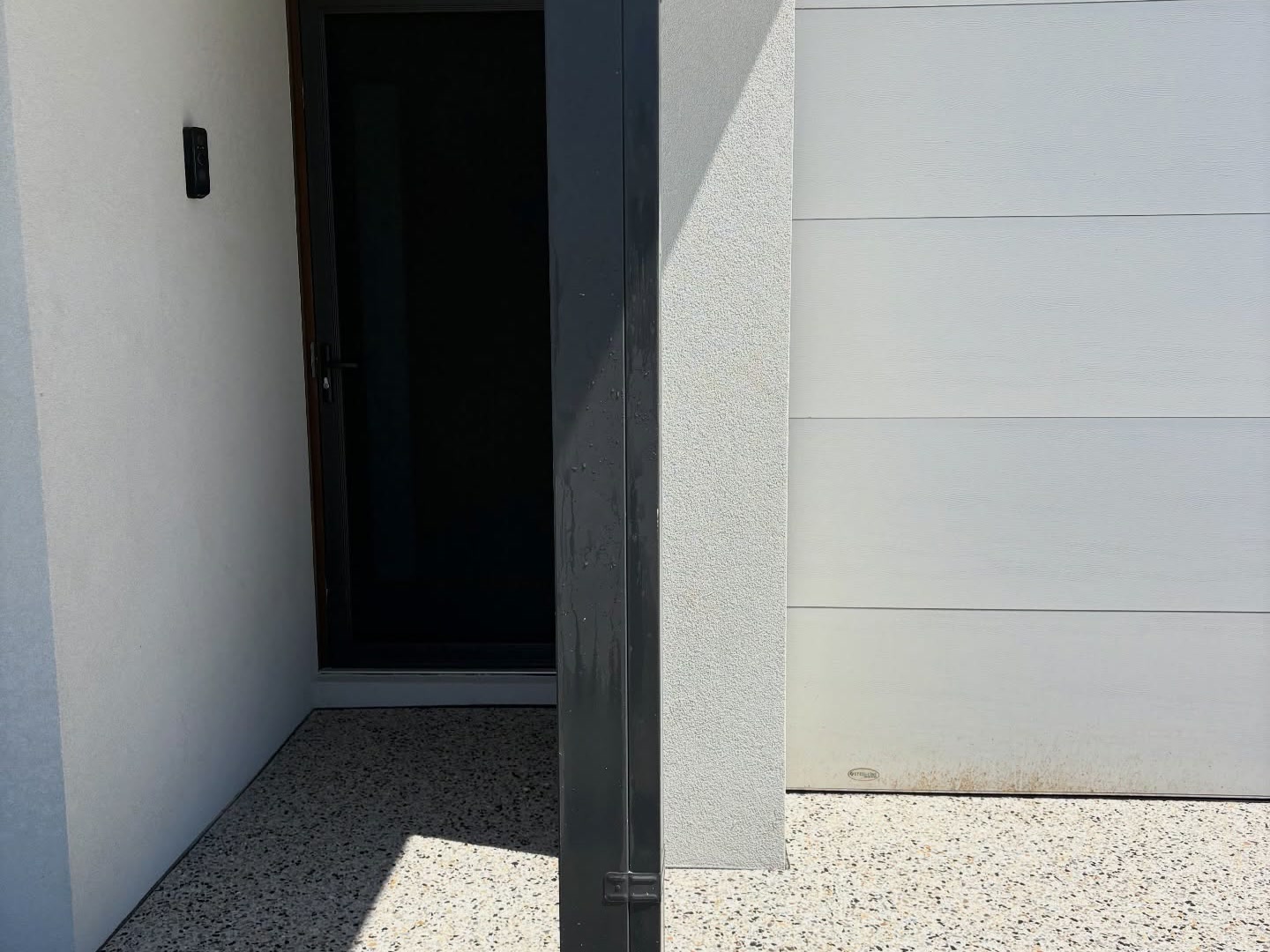
Liquid limestone is everywhere in Perth. Drive through any newer estate in the northern corridor and you will see plenty of it around pools, alfrescos and driveways. Exposed aggregate is the other main option homeowners weigh up. Both look good when done well, and both have genuine trade-offs. Here is an honest, no-spin comparison so you can pick the right one for your project.
What each surface actually is
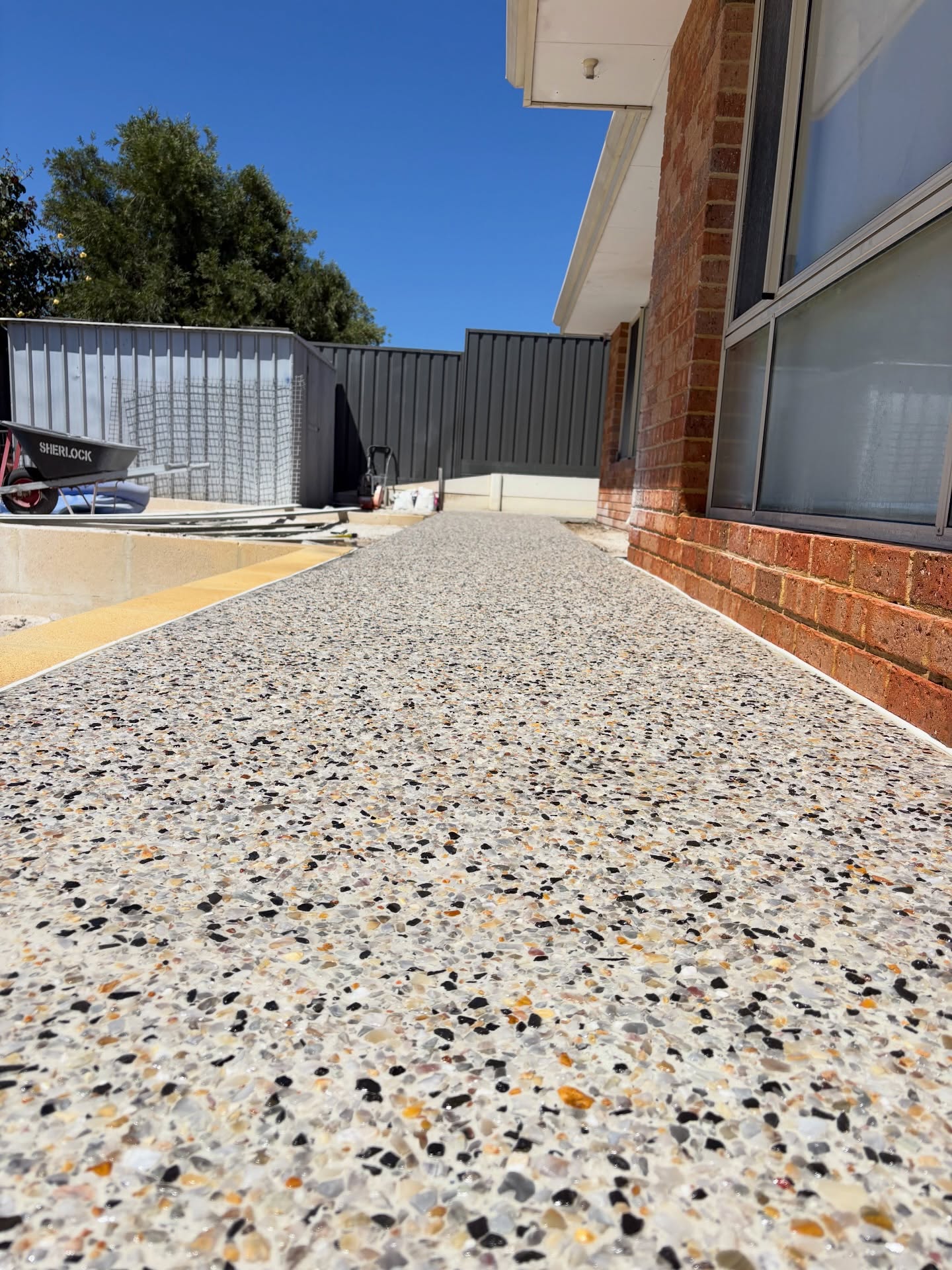
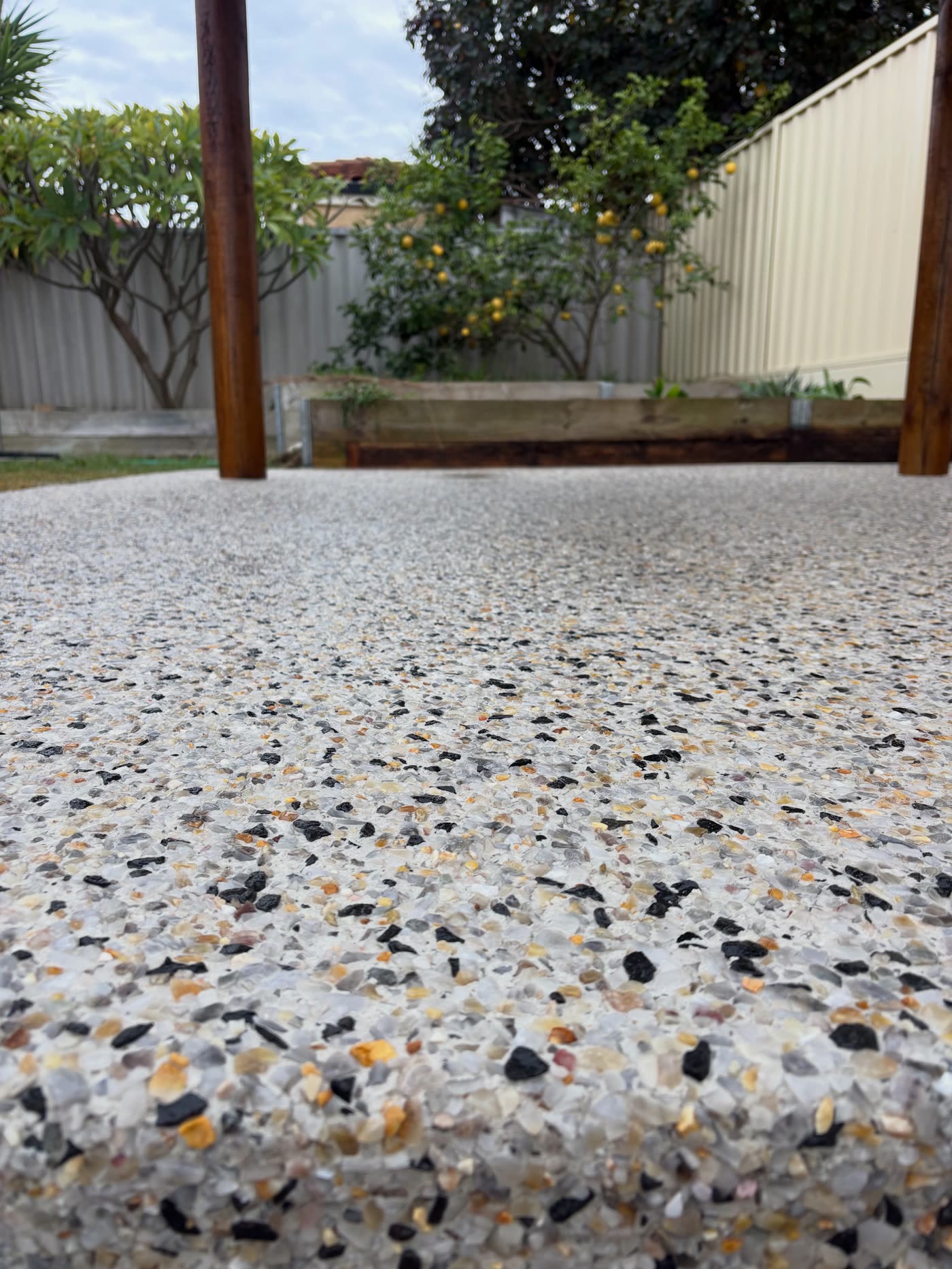
Exposed aggregate is concrete poured with decorative stone mixed through it, then washed and lightly exposed at the surface once it has set enough to hold the stone in place but before it fully cures. What you see and feel is real stone aggregate sitting in a concrete matrix.
Liquid limestone is a mix of limestone aggregate and cement, poured and finished to give a paler, sandier-looking surface than standard concrete. It is popular in Perth partly because it echoes the region’s natural limestone and sits well with coastal-style landscaping.
Heat underfoot
This is one of the most common questions we get, especially for pool surrounds and alfresco areas used barefoot through a Perth summer.
Liquid limestone’s pale colour generally means it does not absorb as much heat as a darker exposed aggregate blend, so it often stays more comfortable underfoot in direct sun. That said, exposed aggregate in a lighter or mid-tone blend narrows this gap considerably. Colour choice within each finish matters as much as which finish you pick, so this is not a simple “one is always cooler” answer.
Slip resistance
Both surfaces can be finished to a good slip-resistant standard, but they get there differently.
Exposed aggregate relies on the exposed stone texture itself for grip. Once washed back properly, the surface has real texture you can feel underfoot, wet or dry.
Liquid limestone typically needs a broom or textured finish applied during installation to build in slip resistance, since the raw poured surface can be smoother. A well-installed liquid limestone surface with correct texturing performs well; a poorly finished one can be noticeably slippery when wet.
If slip resistance around a pool or entry is a priority, ask about the specific finishing method for either surface rather than assuming one option automatically wins.
Cost
As a Perth market guide, exposed aggregate generally runs around $100 to $150 per square metre, broadly similar to or sometimes below liquid limestone depending on the supplier, aggregate blend and finish detail requested. Liquid limestone pricing varies significantly based on the limestone source and finish, so it is worth getting quotes on both if cost is the deciding factor for your project. Every quote depends on site access, area and prep, so treat any online figure as a starting point rather than a locked-in price.
Durability and staining
Exposed aggregate is a dense, hard-wearing surface once cured, and the stone content adds resistance to surface wear over decades of use. It handles vehicle traffic, general foot traffic and Perth’s UV exposure well.
Liquid limestone can be more porous depending on the mix and finish, which makes it more prone to staining from oils, tannins from garden beds, and general grime if it is not sealed and maintained. Both surfaces benefit from sealing, but liquid limestone tends to need more regular attention to stay looking clean.
Repairs and patching
This is where the two finishes diverge the most.
Exposed aggregate can be patched, but matching an existing aggregate blend exactly, particularly if it has weathered or faded slightly over the years, takes a skilled crew and the right stone on hand. A well-matched patch is close to invisible; a poor match stands out.
Liquid limestone has a similar challenge, and because the surface relies on an even sandy tone across the whole area, a patch or repair can be more noticeable if the new mix does not weather in at the same rate as the surrounding surface.
In both cases, using the same installer who understands what was originally used, or being upfront that a full section replacement may look better than a small patch, avoids disappointment later.
Maintenance over the years
Both surfaces need some ongoing care to stay looking their best, but the nature of that care differs.
Exposed aggregate mostly needs a periodic reseal, generally every few years depending on traffic and exposure, plus the odd wash down to clear dust, leaf litter and general grime. Because the stone itself does not fade, a well-maintained exposed aggregate surface tends to look close to its original condition for a long time between reseals.
Liquid limestone tends to need more frequent attention. Its lighter, more porous surface shows staining more readily, and sealing needs to be kept up more consistently to prevent grime and organic staining from garden beds, oil drips or general use from settling in. Skipping resealing for a few years on a liquid limestone surface is more likely to show than skipping it on exposed aggregate.
Neither surface is high-maintenance in an absolute sense, but if you know you are unlikely to keep on top of regular sealing, exposed aggregate is the more forgiving option long-term.
Weather and Perth’s climate
Perth’s combination of long, hot, dry summers and a shorter, wetter winter puts both surfaces through real seasonal swings. Exposed aggregate’s density and stone content generally handle this cycle with minimal issue once properly cured and sealed. Liquid limestone can be more sensitive to UV exposure over time without adequate sealing, which is part of why reseal frequency tends to be higher for limestone surfaces in full-sun positions.
If your project sits in a harsh, west-facing position with little shade, this is worth raising during your quote so the right sealing schedule and product can be recommended from the start, rather than discovered the hard way a couple of summers in.
Which one suits your project
There is no universally correct answer here. As a general guide:
- If you want a driveway that reads as durable, textured and a bit more traditional, exposed aggregate is a strong choice, especially with a blend like Jacaranda that suits Perth’s brick homes.
- If you are going for a coastal, sandy, resort-style look around a pool or alfresco and are prepared to maintain sealing, liquid limestone can be the right call.
- If heat underfoot around a pool is your top priority, lean toward the palest option available in either finish rather than assuming the finish type alone decides it.
Get advice specific to your site
CJH Concrete pours exposed aggregate driveways, alfrescos and paths across Perth’s northern suburbs and metro-wide, and can talk you through how each finish would actually perform on your specific block, orientation and use case. Have a look at the exposed aggregate service page, browse the gallery for real examples, or check driveways if that is the focus of your project.
Call 0476 722 330 for a free measure and quote, including urgent and weekend pours when you are working to a deadline.